| Map of the nuclear world | The uranium story |
| INES, NAMS and the disturbances | Radioactive low radiation?! |
| Uranium transports through Europe | The ABC deployment concept |
INES and the disturbances in nuclear facilities
1980 – 1989
***
INES, Who the f... is INES?
The International Scale of Nuclear and Radiological Events (INES) is a tool to educate the public about the safety implications of nuclear and radiological events, but INES has a problem...
We are always looking for up-to-date information. Anyone who can help, please send a message to:
nuclear-world@reaktorpleite.de
*
2019-2010 | 2009-2000 | 1999-1990 | 1989-1980 | 1979-1970 | 1969-1960 | 1959-1950 | 1949-1940 | Before
1989
October 19, 1989 (INES 3) Vandellos, ESP
A fire at the Vandellòs nuclear power plant severely damaged the safety systems. Vandellòs 1 was then finally shut down.
(Cost approx. US$931 million)
Nuclear Power Accidents
AtomkraftwerkePlag
Vandellos (Spain)
Two reactors originally supplied electricity at the site. Vandellós-1 was a 500 MW gas-cooled, graphite-moderated reactor (GCR) whose construction began on June 21, 1968 and was commissioned on February 11, 1972. In 1990 it was shut down after a turbine fire that almost led to a catastrophe...
Slowly but surely, all the relevant info on disruptions in the nuclear industry is coming out Wikipedia away!
Wikipedia de
Nuclear Power Plant Vandellòs
On October 19, 1989, a serious accident occurred there, in which the block was damaged beyond repair. Repairing the plant would have been uneconomical, so on July 31, 1990 it was decided to shut down Unit 1...
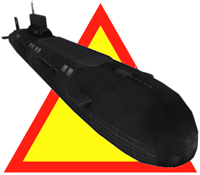 April 7, 1989 (Broken Arrow) Submarine K-278 Komsomolets sunk south of Bear Island, USSR
Atomwaffen A-Z
Nuclear weapon accidents
North Cape Basin, 1989
On the line between North Cape and Bear Islands, the nuclear-powered Soviet submarine K-278 “Komsomolets” (Mike class) deviated from course on April 7, 1989 and sank after a few hours of surface travel. 42 crew members died from burns, injuries, suffocation and hypothermia. A nuclear reactor and two torpedoes with nuclear warheads lie at a depth of 1685 meters, almost 480 kilometers from Norway's coast.
Wikipedia de
Komsomolets (submarine)
The K-278 Komsomolets was a Soviet nuclear submarine. It entered service in 1984 and sank on April 7, 1989. The sinking claimed the lives of 42 crew members.
[...] The fate of the Komsomolets
On April 7, 1989, a fire broke out in the Komsomolets' stern compartment. The boat was at a depth of 150 to 380 meters when a valve on a high-pressure air line connecting the boat's main ballast tanks ruptured and leaking oil (presumably from the hydraulic valve) caught fire on a hot surface. The spread of the fire could not be stopped by sealing off the compartments, as the fire spread through the boat's cable ducts. As a direct result, the reactor's automatic emergency shutdown was initiated to prevent overloading. This caused the drive to fail. The lack of power led to system failure throughout the boat, including the failure of most safety systems. The boat managed to surface after XNUMX minutes, but the rupture in the compressed air system further fueled the fire. Most of the crew left the boat. After a few hours the hull broke and the boat sank. The commander and four other crew members remaining on board tried to save themselves with the emergency capsule. However, this was partially flooded and filled with poisonous gases - only one of them survived ascent to the surface.
[...] At the time of the sinking, the boat was carrying two nuclear-tipped and eight conventional torpedoes.
[...] The consequences of the demise of the Komsomolets
The sinking site is in one of the world's richest fisheries, and a leak of radioactive inventory could cost the fishing industry billions in losses. In May 1992, the research vessel Akademik Mstislaw Keldysh was called to the scene of the accident and discovered numerous fractures along the entire length of the titanium pressure hull. Some were up to 40 cm long. It was also believed that cracks could be seen in the primary cooling circuit. Cracks in this cycle would allow radioactive material to leave the reactor core and enter the lake water and thus the food chain. In the spring of 1993, the Russian government classified the fractures as harmless. Another study in August 1993 examined the circulation movements of the water at the accident site, but found no “vertical mixing” of the layers and therefore no acute risk of radioactive contamination. However, people were surprised to find an almost 8 m large hole in the bow torpedo room, which could not be explained as a result of the accident, but was obviously caused by an explosion.
[...] When an investigation in the summer of 1994 revealed that plutonium-239 was leaking from one of the warheads, the torpedo shaft was sealed.
The cost of salvaging the boat was estimated at over $1995 billion in 24. It also carried the risk that the shell could break during the project. A fallback plan was to seal the boat with a jelly-like material. Implementation of this plan began on June 1995, 1996 and was completed in July 20. The case is expected to provide 30 to XNUMX years of protection...
 1989 (INES Class.?) Krsko, SVN
Wikipedia de
Krsko Nuclear Power Plant#Incidents
In 1989, as a correct response to an operational disruption, a valve to relieve pressure in the reactor circuit was opened due to pressure. After the pressure transient was reduced, it unexpectedly got stuck in the open position (as it did before the core meltdown accident in Three Mile Island in 1979). Due to the associated loss of cooling water, the emergency cooling switched on automatically (here, in contrast to Three Mile Island, it was not switched off again by the staff by mistake). After about fifteen minutes, the valve closed and the emergency cooling had replenished the reactor circuit to some extent. After the accident, slightly radioactive water had to be removed from the containment swamp by discharging it into the neighboring Sava river. (Source: SKI Report IRS)
AtomkraftwerkePlag
Krsko (Slovenia)
1988
June 18, 1988 (INES Class.?) Tihange-1, BEL
On June 18, 1988, during the operation of the pressurized water reactor, a sudden leak occurred in a short section of the ECCS (Emergency Core Cooling System) pipeline that could not be isolated. The leak rate was in the order of 1.300 liters per hour. The cause of the leak was a crack in the wall of the pipeline measuring 9 cm on the inside and 4,5 cm on the outside. The risk of a pipe rupture in the emergency cooling system is considerable, when the emergency injection system is activated, since large quantities of cooling water are injected in the event of a loss of coolant.
(Costs ?)
Nuclear Power Accidents
AtomkraftwerkePlag
Tihange (Belgium)#Incidents
On June 18, 1988, a leak was discovered in the reactor core's emergency cooling system...
The List of incidents at the Tihange nuclear power plant in Wikipedia only begins in 2002; What happened before is apparently no longer relevant.
Wikipedia de
Tihange Nuclear Power Plant#Incidents,_Damage_and_Reactions
The Tihange nuclear power plant consists of three power plant blocks that were connected to the grid from 1975 to 1985...
12 May 1988 (INES 2) NPP Civaux, FRA
The Civaux-1 pressurized water reactor was shut down for five days when, during start-up tests, a 25 cm diameter pipe of the main residual heat removal system ruptured and a large leak (30.000 liters per hour) occurred in the primary cooling circuit. The reactor core must be continuously cooled, even when shut down, to dissipate the significant amount of residual heat from the fuel. It took nine hours to isolate the leak and achieve a stable situation. An 18 cm long crack was found at a weld and 300 m³ of primary coolant had leaked into the reactor building. The operator EDF suggested classifying the event as level 1 on the INES scale, but the safety authorities opted for level 2.
(Costs ?)
Nuclear Power Accidents
AtomkraftwerkePlag
Civaux (France)
On May 12, 1998, a serious accident occurred in Civaux-1. Due to a fatal design flaw, a pipe broke under the influence of extreme temperature changes. The main cooling circuit lost 300 cubic meters of contaminated water, almost three quarters of a full charge. It was only after 10 hours that a raiding party wearing protective suits that penetrated the containment interior was able to bring the reactor back under control and prevent a catastrophe. Fortunately, the reactor was still in test operation at the time of the accident and the fuel elements generated little heat. After the accident, the entire construction series was stopped: "The reactor core of Civaux-1 was unloaded, as were the cores of the two N1996 units started in 1997 and 4 at the Chooz site in the Ardennes." The after-cooling system was redesigned and redesigned.
Wikipedia de
Civaux nuclear power plant
On May 12, 1998, a nuclear incident occurred in which a crack 18 centimeters long and 2,5 centimeters wide appeared in a cooling circuit of the first reactor. According to authorities, 30 m³ of water per hour escaped through this crack. The leak could only be located after almost 10 hours and the leaking water circuit was shut off. Cooling until the leak was repaired was ensured with the second water circuit. The incident was classified by the French nuclear regulator ASN as level 2 on the International Nuclear Event Scale (INES)...
1987
16 December 1987 (INES 1 Class.?) NPP Biblis A, GER
AtomkraftwerkePlag
Biblis (Hesse)
An accident occurred in Biblis A on December 16, 1987, in which radioactive water escaped outside the containment container due to valve failure and misconduct by the operating team. "There (...) the outside world was only protected from radiation by highly radioactive cooling water from reactor block A for 15 hours by a barrier, the so-called secondary barrier." The incident was not reported by the operator, but was discovered days later by the regulator during an investigation into another fault at the nuclear power plant. During the subsequent investigation, TÜV Bayern found that an uncontrollable incident had only just been avoided and that there had been serious violations of safety regulations for years.
The story of this accident, which almost led to the closure of Biblis, as well as the cover-up by RWE and German politics, in which the then Environment Minister Klaus Töpfer was also involved, was examined in detail by "Spiegel" in 1988...
Spiegel
11 December 1988
“We were incredibly lucky”
For almost a year, the operators of the Biblis nuclear power plant and the supervisory authorities kept the worst incident in the history of German nuclear technology secret. The course of this accident refutes the safety philosophy of nuclear energy production at its weakest point: the incorrect actions of humans in relation to a highly complex machine system are not predictable.
25 December 1988
Big sloppiness New highlight of the series of breakdowns in nuclear reactors
Brokdorf was operated without functioning emergency generators, in Biblis specially developed protective circuits failed - the reactor is switched off...
Wikipedia de
Nuclear Power Plant Biblis
When the reactor was started up, a valve that has to shut off a connecting line to the reactor circuit, which is under 150 times atmospheric pressure, got stuck and remained open. It was only after 15 hours that the operating staff took the lighting warning lamp seriously; it was believed that the lamp's control logic was defective. The personnel did not shut down the reactor immediately, but instead opened a second, redundant safety valve to flush out the jammed valve and thus close it. The valve did not close and 107 liters of radioactive cooling water leaked into the annulus. The incident only became public after a year through an article in an American trade magazine (Nucleonic Weeks), but was reported by the operator to the authorities in a timely manner, which in turn did not publish a press release...
Wikipedia en
Nuclear power accidents by country#Germany
Translation with https://www.DeepL.com/Translator (free version)
 September 13, 1987 (INES 5) Cobalt cannon Goiânia, BRA
The nuclear chain
Goiania, Brazil
Radiation accident
One of the worst civilian radiation accidents of all time occurred in the Brazilian city of Goiânia. In 1987, scrap collectors taking a radiation therapy device containing cesium-137 from an empty clinic resulted in 249 people being irradiated. Four of them died a short time later and at least 21 suffered severe radiation damage. The long-term consequences of the accident were never investigated, and the decontamination of the affected parts of the city was only carried out superficially...
AtomkraftwerkePlag
Goiania, Brazil 1987
Robbery of cesium-137 from a disused radiation clinic
In the fall of 1987, just one year after Chernobyl, a nuclear disaster occurred in the central Brazilian city of Goiânia. It makes it clear that radioactive substances stored in medical centers can pose similar risks to commercial and military nuclear reactors that are out of control.
The starting point of the disaster was the ruins of the Instituto Goiâno de Radioterapia, a disused radiotherapy center that had not been demolished. The government had failed to remove radioactive materials from the site and the former operator had left equipment there...
Wikipedia
The Goiânia accident
occurred from September 13, 1987 in the Brazilian city of Goiânia. During a break-in at a disused clinic, a medical radiotherapy device was stolen and the radioactive material it contained was distributed by the thieves among friends and acquaintances. Hundreds of people were contaminated with radioactivity, some of them severely, four people are known to have died within a few weeks and other deaths are linked to the accident. Parts of the city are still contaminated with radioactivity to this day. The accident was classified by the International Atomic Energy Agency (IAEA) as the world's largest radiological accident to date due to its level of contamination and was rated at level 5 (out of 7) on the International Nuclear Event Rating Scale (INES)...
1986
1986 (INES Class.?) NPP Mühleberg, CHE
Slowly but surely, all the relevant info on disruptions in the nuclear industry is coming out Wikipedia removed! The following text is in October 2023 Do NOT spread pesto on this layer! can be found in Wikipedia.
Wikipedia de
Nuclear Power Plant_Mühleberg
In the Chernobyl year of 1986, an independent physics teacher carried out dose measurements in the area around the Mühleberg nuclear power plant. To his amazement, one day the readings were unusually high. The operator had to admit filter damage, which led to releases just below the limit value. Apparently neither the operator nor the HSK supervisory authority registered this release. The values are still slightly elevated today...
AtomkraftwerkePlag
Mühleberg_(Switzerland)
4 - 5 May 1986 (INES 0 Class.?) NPP  THTR 300, GER
Release of radioactivity into the environment means if can INES rules apply INES category 3.
(Cost approx. US$308,2 million)
Wikipedia de
THTR-300 Nuclear Power Plant#Problems and Incidents
Unknown amounts of radioactive aerosols escaped from the nuclear power plant THTR-300 in Hamm-Uentrop. Broken spherical fuel elements clogged the pipes of the charging system and attempts were made to blow these pipes free again with high gas pressure (helium). The existing measuring devices were switched off at the time of the incident, so nothing is known about the exact quantities. Further attempts to clear the pipes resulted in all the jammed balls breaking and parts of the system being bent. The reactor was temporarily shut down. On September 1, 1989, the decommissioning of the THTR-300 was decided due to disagreements about further funding.
Wikipedia en
Nuclear power accidents by country#Germany
Translation with https://www.DeepL.com/Translator (free version)
AtomkraftwerkePlag
Hamm-Uentrop (North Rhine-Westphalia)
A few days after the Chernobyl disaster, an incident occurred in the THTR: Broken spherical fuel elements clogged on the 4th/5th. In May 1986, a feeding system was installed, whereupon radioactive aerosols were released and contaminated dust and contaminated helium were released into the environment in unknown quantities. Near the reactor, 50.000 becquerels of radiation were measured per square meter of soil caused by radioactive graphite dust. The operator initially kept quiet about the incident and later described the impact on the environment as not being "significantly significant"...
See: The incident
SPIEGEL article 'Sparkling eyes'
April 26, 1986 (INES 7 | NAMS 8) NPP Chernobyl, USSR
There were about 5,2 million TBq of radioactive radiation released.
(Cost approx. US$260000 million)
Nuclear Power Accidents
The nuclear chain
Chernobyl, Ukraine
Catastrophe in a nuclear power plant
The Chernobyl nuclear meltdown in April 1986 was by far the largest accident in the history of the civilian nuclear industry. Entire areas of the country were contaminated and made uninhabitable for generations. The radioactive fallout led to tens of thousands of cases of cancer, deaths, miscarriages and deformities - and not just in the former Soviet Union.
background objects
The first nuclear reactor was built in Chernobyl between 1971 and 1977. By 1983, the plant had been expanded to include three more reactors. In the neighboring town of Pripyat, almost all of the approximately 18.000 residents lived from jobs in the nuclear industry. The Chernobyl disaster began during a system test on April 26, 1986. A sudden increase in reactor power made an emergency shutdown necessary. This led to the achievement of a supercritical mass and thus to the start of an atomic chain reaction within the reactor. The 1.000-ton roof was lifted by the force of the explosion and the graphite-containing inventory caught fire. A cloud of radioactive smoke swept over large parts of Eastern and Central Europe and covered entire areas with radioactive fallout. Large amounts of radioactivity fell, especially north of the power plant, in parts of Belarus, but parts of Scandinavia, Asia Minor and the Bavarian Forest were also covered with radioactive iodine-131 or cesium-137. The catastrophe was kept secret from the population for days. Evacuation and protection measures were severely delayed.
Consequences for the environment and health
The first victims of the nuclear disaster were the approximately 800.000 liquidators, mostly young recruits, who were brought to Chernobyl from all over the Soviet Union to bring the disaster under control. They had to carry radiant rubble across the site with their bare hands and build a gigantic sarcophagus over the damaged reactor block. An estimated 14 to 15% of them had already died in 2005, 19 years after the accident; More than 90% of them are sick, many probably due to their high levels of radiation exposure...
Wikipedia de
Chernobyl nuclear disaster
A major meltdown (INES level 7) in unit 4 of the Chernobyl nuclear power plant in the Ukraine resulted in a core meltdown and subsequent explosions. Large amounts of radioactivity were released through the exposure and fire of the reactor core, and the immediate surroundings were heavily contaminated; In addition, there were numerous direct radiation victims among the relief workers. The catastrophe was proven by radioactivity measurements and fallout in Sweden and other European countries. A large restricted area was set up and the area was evacuated...
AtomkraftwerkePlag
Chernobyl (Ukraine)
On April 26, 1986, the catastrophic INES level 4 accident occurred in Chernobyl's reactor 7, in which large amounts of radioactive substances were released into the surrounding area and atmosphere following a core meltdown and hydrogen explosions...
Federal Office for the Safety of Nuclear Waste Management (BASE)
Nuclear accidents
In the history of the civil use of nuclear energy, there have been serious accidents in nuclear facilities. The causes of the accident were very different. Nuclear accidents can occur, for example, due to the failure of technical components, human errors or natural disasters. A nuclear accident causes a greatly increased release of radioactive substances...
Federal Office for Radiation Protection (BFS)
Nuclear accidents: Chernobyl
The Chernobyl accident led to the revision of programs to protect the population from radioactive radiation in many countries...
4 January 1986 (INES 4) Nuclear factory Sequoyah, USA
Wikipedia de
List of Accidents in Nuclear Facilities#1980s_Years
During the Uranium conversion plant Sequoyah by Kerr McGee In Gore, Oklahoma, an overfilled cylinder containing uranium hexafluoride burst after being heated to unacceptable levels. While filling uranium hexafluoride into a transport cylinder intended for this purpose, it was noticed that too much had been filled into the cylinder due to incorrect calibration of a scale. The attempt to empty the cylinder back to a normal level initially failed because the uranium hexafluoride in the container had cooled and solidified. To enable further decanting, heating of the cylinder was instructed to liquefy the material again. During the heating process, the overfilled cylinder ruptured and uranyl fluoride and hydrofluoric acid were released by reacting with the humidity. One worker died from inhaling hydrofluoric acid, and 100 workers and residents had to be hospitalized.
Wikipedia en
Sequoyah Fuels Corp
Sequoyah Fuels Corporation owned and operated a uranium processing plant near Gore, Oklahoma. The company was founded in 1983 as a subsidiary of Kerr McGee founded. In 1988 it was sold to General Atomics.
The 1986 Sequoyah Corporation fuel release in Oklahoma
On January 4, 1986, a tank rupture occurred at the Sequoyah plant, killing 26-year-old worker James Harrison and requiring 37 of the 42 workers on site to be hospitalized...
Another accident involving the release of UF6 occurred in 1992. The plant ceased production in 1993 and was decommissioned.
Translation with https://www.DeepL.com/Translator (free version)
AtomkraftwerkePlag
There are comparable nuclear factories all over the world:
Uranium enrichment and reprocessing - facilities and sites
During reprocessing, the inventory of spent fuel elements can be separated from one another in a complex chemical process (PUREX). Separated uranium and plutonium can then be reused. As far as the theory...
Youtube
Uranium economy: Facilities for processing uranium
All uranium and plutonium factories produce radioactive nuclear waste: Uranium processing, enrichment and reprocessing plants, whether in Hanford, La Hague, Sellafield, Mayak, Tokaimura or wherever in the world, all have the same problem: with every processing step More and more extremely toxic and highly radioactive waste is being produced...
1985
August 10, 1985 (INES 5) K-431 nuclear submarine, Vladivostok, USSR
Wikipedia de
Echo Class#K-31
K-31 was laid down on January 11, 1964 in Komsomolsk-on-Amur and was launched on September 8, 1964. In 1978 the boat received the tactical number K-431. On August 10, 1985, the boat was anchored at a naval facility in Chasma Bay, 55 km from the city of Vladivostok, to receive new fuel rods for its reactors. A mistake in releasing and lifting the top closure of a reactor caused a spontaneous chain reaction. The reactor cover was blown off and tore open the boat's pressure hull, allowing water to enter the hull and causing K-431 to sink to the bottom next to the pier. Ten crew members were killed. During the accident and the subsequent rescue work, seven people were heavily irradiated and 39 others suffered from radiation sickness. The reactor compartment was then filled with cement and K-431 was towed to a long-term storage facility. In 2010 the boat was moved to the “Stern” shipyard in Bolshoi Kamen and its scrapping began...
The nuclear chain
Chasma Bay, Russia
Nuclear submarine accident
In August 1985, an explosion on a Soviet nuclear submarine in Chasma Bay resulted in a massive release of radioactivity. More than 290 people were exposed to radioactivity and the sea and surrounding terrain were permanently contaminated. The nuclear accident was kept secret for many years. In addition, the surrounding sea has been extensively contaminated due to long-term dumping of nuclear waste. The extent of the consequences for the environment and health will probably never be fully understood.
background objects
The Soviet naval base in Chasma Bay near Vladivostok was treated as a state secret during the Cold War. On the morning of August 10, 1985, workers there had just opened the reactor of the nuclear submarine K-431 when the wave of a passing torpedo boat hit the ship. All fuel rods slipped and the resulting critical mass led to a spontaneous chain reaction. A massive explosion tore off the 12-ton reactor cover and reactor fuel elements and destroyed the submarine's pressure hull. The fire that followed the explosion released radioactive isotopes such as iodine-131, cobalt-60 and manganese-54 for about seven hours. The radioactive cloud rose up to 50 m and was blown to the northwest, where radioactive fallout left a contaminated path 3,5 kilometers long and up to 650 m wide over the Dunai Peninsula. At the same time, the seabed and parts of the adjacent harbor were contaminated with cobalt-60. Similar accidents on Russian nuclear submarines were reported in Severodvinsk in 1965, 1968 and 1980, and in Nizhny Novgorod in 1970, where a nuclear chain reaction occurred during the construction of a submarine nuclear reactor. The Chasma Bay accident was successfully kept secret until 1993.
Consequences for the environment and health
Ten people died as a direct result of the explosion. The pure gamma radiation reached five millisieverts per hour (i.e. about 16.000 times the natural background radiation of 0,0003 mSv/h). The rest of the radiation was released in the form of radioactive particles with a total activity of 259 PBq (Peta = quadrillion)...
July 10, 1985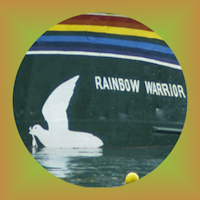 Rainbow Warrior I Monument in Auckland Harbour, New Zealand
Greenpeace
Rainbow Warrior I - the legend
In May 1985, the crew landed on the heavily radiation-contaminated Pacific island of Rongelap. Their residents had asked Greenpeace for help. The Rainbow Warrior takes around 300 people on board and relocates them to another island.
A few weeks later there was a scandal. The Greenpeace flagship anchored in the port of Auckland in New Zealand after its South Seas mission. On July 10, 1985, two bombs detonated on the ship's hull, tearing a huge hole in the ship's side. The Rainbow Warrior sinks immediately. The crew escapes to shore, Greenpeace photographer Fernando Perreira dies...
The assassination of the Rainbow Warrior
Terror against peaceful anti-nuclear protest: In July 1985, an explosion ripped apart the Greenpeace ship Rainbow Warrior in the harbor of Auckland, New Zealand. The trail leads to the French secret service...
Wikipedia de
Sinking the Rainbow Warrior
The Greenpeace ship Rainbow Warrior was sunk on July 10, 1985 by French Service Action agents in Auckland, New Zealand.
The operation, dubbed “Operation Satanique” by the French secret service, was financed from the “fonds speciaux”, a kind of official “slush fund” that only the President of the Republic can dispose of...
June 9, 1985 (INES 4) NPP Davis Besse, USA
In June 1985, a potentially catastrophic 12-minute loss of coolant shut down the plant for more than a year. The NRC described the accident as the worst since Three Mile Island.
(Cost approx. US$26 million)
Nuclear Power Accidents
Wikipedia de
Nuclear power plant_Davis_Besse#Incidents
On June 9, 1985, when the cooling system of the 'Kkw Davis Besse 1' was commissioned, there was a malfunction in a pump which, due to incorrect operation by an operator, was running at too high a speed. To counteract this, the delivery rate was throttled. Shortly thereafter, there was overpressure at another pump. The operators turned off the pump. However, this stopped the circulation of the coolant flow. To counteract this, an operator activated the emergency feedwater pumps. The event was first classified as “extraordinary”; later the incident was investigated more closely and it was found that a near meltdown (melting of the reactor core) had occurred...
Wikipedia en
Nuclear power accidents by country#United_States
Translation with https://www.DeepL.com/Translator (free version)
Sierra Club
DAVIS BESSE NUCLEAR REACTOR
The Davis-Besse nuclear reactor is located on Lake Erie in Oak Harbor, Ohio, 20 miles east of Toledo. It is a commercial nuclear power plant with an output of 894 megawatts. In 2015, the Nuclear Regulatory Commission (NRC) granted FirstEnergy a license extension to operate Davis-Besse 20 years beyond its design lifespan of 40 years. The generation of high-level radioactive waste at Davis-Besse will increase by approximately 30 tons per year.
ACCIDENTS AND INCIDENTS: Davis-Besse has experienced accidents and violations since before it was put into operation.
Six of the 34 "major accidents" in the United States occurred at Davis-Besse...
Translation with https://www.DeepL.com/Translator (free version)
AtomkraftwerkePlag
Davis-Besse_(USA)
1984
July 17, 1984 (INES 3 | NAMS 1,8) Nuclear factory Windscale/Sellafield, GBR
It became about 2,9 TBq radioactive radiation released. A solvent fire in the sludge tank of the wastewater treatment plant in building B241 was caused by dripping hot metal during cutting work.
(Cost approx. US$33,4 million)
Nuclear Power Accidents
Slowly but surely, all the relevant info on disruptions in the nuclear industry is coming out Wikipedia away!
Wikipedia de
Sellafield
The complex was made famous by a catastrophic fire in 1957 and by frequent nuclear incidents, which is one of the reasons why it was renamed Sellafield. Up until the mid-1980s, large quantities of the nuclear waste generated in day-to-day operations were discharged in liquid form via a pipeline into the Irish Sea.
Wikipedia en
Sellafield # Incidents
Radiological releases
Between 1950 and 2000, there were 21 serious incidents or accidents involving off-site radiological releases that warranted classification on the International Nuclear Event Scale, one at Level 5, five at Level 4 and fifteen at Level 3. In addition, there were Intentional releases of plutonium and irradiated uranium oxide particles into the atmosphere over long periods of time known in the 1950s and 1960s...
Translation with https://www.DeepL.com/Translator (free version)
AtomkraftwerkePlag
Sellafield (formerly_Windscale), United Kingdom
There are comparable nuclear factories all over the world:
Uranium enrichment and reprocessing - facilities and sites
During reprocessing, the inventory of spent fuel elements can be separated from one another in a complex chemical process (PUREX). Separated uranium and plutonium can then be reused. As far as the theory...
Youtube
Uranium economy: Facilities for processing uranium
Reprocessing plants turn a few tons of nuclear waste into many tons of nuclear waste
All uranium and plutonium factories produce radioactive nuclear waste: Uranium processing, enrichment and reprocessing plants, whether in Hanford, La Hague, Sellafield, Mayak, Tokaimura or wherever in the world, all have the same problem: with every processing step More and more extremely toxic and highly radioactive waste is being produced...
1983
November 11, 1983 (INES 3) Nuclear factory Windscale/Sellafield, GBR
Accidental transfer of 59 TBq Radioactivity with solvents and raw materials from building B205 into a sea tank in building B242.
(Cost approx. US$44 million)
Nuclear Power Accidents
Slowly but surely, all the relevant info on disruptions in the nuclear industry is coming out Wikipedia away!
Wikipedia de
Sellafield
The complex was made famous by a catastrophic fire in 1957 and by frequent nuclear incidents, which is one of the reasons why it was renamed Sellafield. Up until the mid-1980s, large quantities of the nuclear waste generated in day-to-day operations were discharged in liquid form via a pipeline into the Irish Sea.
Wikipedia en
Sellafield # Incidents
Radiological releases
Between 1950 and 2000, there were 21 serious incidents or accidents involving off-site radiological releases that warranted classification on the International Nuclear Event Scale, one at Level 5, five at Level 4 and fifteen at Level 3. In addition, there were Intentional releases of plutonium and irradiated uranium oxide particles into the atmosphere over long periods of time known in the 1950s and 1960s...
Translation with https://www.DeepL.com/Translator (free version)
AtomkraftwerkePlag
Sellafield (formerly_Windscale), United Kingdom
There are comparable nuclear factories all over the world:
Uranium enrichment and reprocessing - facilities and sites
During reprocessing, the inventory of spent fuel elements can be separated from one another in a complex chemical process (PUREX). Separated uranium and plutonium can then be reused. As far as the theory...
September 23, 1983 (INES 4) Nuclear center Constituyentes, Buenos Aires, ARG
On September 23, 1983, a nuclear meltdown occurred in the Constituyentes nuclear center due to an operating error during the reconfiguration of the RA-2 research reactor, in which a total of 18 people were irradiated; one of the reactor technicians died two days later from the radiation damage he had suffered.
(Cost approx. US$76 million)
Nuclear Power Accidents
Wikipedia it
Accident nuclear reactor RA-2
The RA-2 nuclear accident, which occurred in Argentina on Friday, September 23, 1983, resulted from a serious human error in operation that triggered a power excursion in the RA-2 research reactor. The reactor was located in the Centro Atómico Constituyentes, a division of the Comisión Nacional de Energía Atómica (CNEA). It is the worst accident in the history of Argentine nuclear development, with fatal consequences for the technician in charge of the tests. In addition, 17 other people were exposed to varying levels of radiation depending on the distance from the scene of the accident...
Translation with https://www.DeepL.com/Translator (free version)
June 30, 1983 (INES Class.?) NPP Embalse, ARG
AtomkraftwerkePlag
Embalse (Argentina)
Prevented GAU 1983 and other incidents
On June 30, 1983, an accident occurred that those responsible kept secret from the public: According to "Spiegel", after several pumps failed and due to operating errors, the secondary circuit collapsed, the water continued to heat up, radioactive steam and hot water shot out a defective auxiliary valve. After more than three hours, all valves could be closed using improvised measures, a catastrophe was just avoided...
Spiegel 17/1987
»A cold shiver runs down my spine«
SPIEGEL report on hidden nuclear power plant incidents around the world
Humanity has already narrowly slid past catastrophe several times. This is what 48 accident reports that were kept secret by the Vienna International Atomic Energy Agency reveal: Mishaps, often of the most bizarre, mundane kind, from the United States and Argentina to Bulgaria and Pakistan...
Wikipedia de
Embalse Nuclear Power Plant
On June 30, 1983, a serious incident occurred in the nuclear power plant (overheating of the cooling circuit), which, however, could be brought under control by employees. In 1986 there was another incident when heavy water came out of the power plant. Both incidents were kept secret by those responsible for a long time, only the International Atomic Energy Agency (IAEA) was informed. The operators were obviously able to prevent an INES classification. It was only through research that the media managed to bring the incident to the public.
By 2007, a total of ten accidents had occurred at the Embalse nuclear power plant...
1982
September 1, 1982 (INES 5) NPP Chernobyl, USSR
Wikipedia de
Chernobyl nuclear power plant
On September 1, 1982, a central fuel assembly was destroyed by overheating as a result of operator error. Significant amounts of radioactivity escaped, the radioactive gases reached the city of Pripyat. During the repair, several workers were exposed to a significantly excessive dose of radiation...
AtomkraftwerkePlag
Chernobyl (Ukraine)
On September 1st or 9th, 1982 (depending on the source) the first serious incident had already occurred. The central fuel element in reactor 1 overheated and was completely destroyed due to an operator error. Radioactive substances were released into the environment and spread through the plant and the industrial zone to Pripyat: iodine, krypton, xenon, tellurium and cesium. While repairing the damage, workers were exposed to increased radiation, several died...
Aug 4, 1982 (INES Class.?) NPP Doel 1 and 2, BEL
Wikipedia de
Doel Nuclear Power Plant
On August 4, 1982, after the failure of the 380 kV network and strong voltage fluctuations in the reserve network, emergency power occurred in the two oldest Doel blocks. Four diesel generators started, but due to errors they were unable to provide the supply necessary for cold start-up (see decay heat). As a final reserve, an electricity-independent cooling system powered by the steam from the decay heat came into action in both reactor blocks until the power supply was restored after about an hour (source: SKI report IRS)...
AtomkraftwerkePlag
Doel (Belgium)
1981
October 1, 1981 (INES 3 | NAMS 1,3) Nuclear factory Windscale/Sellafield, GBR
Reprocessing of fuel that had been cooled for only 27 days resulted in the release of 0,9 TBq radioactive iodine.
(Cost approx. US$9 million)
Nuclear Power Accidents
AtomkraftwerkePlag
Sellafield (formerly_Windscale), United Kingdom
In November 2001, a study on the possible toxic effects of the reprocessing plants in La Hague (France) and Sellafield was published by the European Parliament, written by WISE/Paris under the direction of Mycle Schneider. Their conclusion was that up to this point in time both sites had the highest human-caused release of radioactivity, comparable to a major nuclear accident every year. The release of radioactive substances was possibly twice that after the Chernobyl disaster. A significant increase in leukemia cases was found in the area around both locations; It is considered possible that radioactive emissions from both plants contributed. At Sellafield, significant concentrations of radionuclides have been discovered in food, sediments in flora and fauna. Carbon-14, cesium-137, cobalt-60, iodine-129, plutonium, strontium-90, technetium-99 were found, the latter with a half-life of 214.000 years...
There are comparable nuclear factories all over the world:
Uranium enrichment and reprocessing - facilities and sites
During reprocessing, the inventory of spent fuel elements can be separated from one another in a complex chemical process (PUREX). Separated uranium and plutonium can then be reused. As far as the theory...
Slowly but surely, all the relevant info on disruptions in the nuclear industry is coming out Wikipedia away!
Wikipedia en
Sellafield # Incidents
Radiological releases
Between 1950 and 2000, there were 21 serious incidents or accidents involving off-site radiological releases that warranted classification on the International Nuclear Event Scale, one at Level 5, five at Level 4 and fifteen at Level 3. In addition, there were Intentional releases of plutonium and irradiated uranium oxide particles into the atmosphere over long periods of time known in the 1950s and 1960s...
Translation with https://www.DeepL.com/Translator (free version)
January 6, 1981 (INES 3) Nuclear factory La Hague, FRA
In La Hague there was a fire disaster in a waste storage facility with graphite elements and uranium metal, and a worker was exposed to increased radiation.
(Cost approx. US$5,4 million)
Nuclear Power Accidents
AtomkraftwerkePlag
La Hague (France)
A study published by the European Parliament in 2001 lists events from 1989 to 2000. Eight incidents were described in more detail...
There are comparable nuclear factories all over the world:
Uranium enrichment and reprocessing - facilities and sites
During reprocessing, the inventory of spent fuel elements can be separated from one another in a complex chemical process (PUREX). Separated uranium and plutonium can then be reused. As far as the theory...
EU study from 2001
See on the Pages 112 and 113
Graphite elements burned for 24 hours in a waste silo. The maximum level of measured air contamination, 700 Bq/m3, was reached 10 hours after the fire started. The activity released is mainly due to cesium-137 and -134 (137Cs and 134Cs) and is between 740 GBq and 1.850 GBq, i.e. 10 times the annual limit. The annual limit for the entire La Hague site is 74 GBq for cesium-137.
Strontium-90 (90Sr) was detected in stormwater and the permissible limit for surface contamination was reached 6 km from the site. One worker received the annual permissible dose of 50 mSv in one day.
An off-site health impact study has not been conducted...
Translation with https://www.DeepL.com/Translator (free version)
Slowly but surely, all the relevant info on disruptions in the nuclear industry is coming out Wikipedia away!
Wikipedia de
Reprocessing plant_La_Hague#malfunctions,_accidents
In 1981 there was a fire disaster in a waste storage facility for graphite elements and uranium metal (INES level 3), which worried many people...
Youtube
Uranium economy: Facilities for processing uranium
Reprocessing plants turn a few tons of nuclear waste into many tons of nuclear waste
All uranium and plutonium factories produce radioactive nuclear waste: Uranium processing, enrichment and reprocessing plants, whether in Hanford, La Hague, Sellafield, Mayak, Tokaimura or wherever in the world, all have the same problem: with every processing step More and more extremely toxic and highly radioactive waste is being produced...
1980
September 22, 1980 (INES 3 | NAMS 1,6) Nuclear factory Windscale/Sellafield, GBR
Corrosion in the Magnox storage silo in building B38 led to the release of 2 TBq Plutonium.
(Cost approx. US$55 million)
Nuclear Power Accidents
Slowly but surely, all the relevant information on disruptions in the nuclear industry from Wikipedia away!
Wikipedia de
Sellafield
The complex was made famous by a catastrophic fire in 1957 and by frequent nuclear incidents, which is one of the reasons why it was renamed Sellafield. Up until the mid-1980s, large quantities of the nuclear waste generated in day-to-day operations were discharged in liquid form via a pipeline into the Irish Sea.
Wikipedia en
Sellafield # Incidents
Radiological releases
Between 1950 and 2000, there were 21 serious incidents or accidents involving off-site radiological releases that warranted classification on the International Nuclear Event Scale, one at Level 5, five at Level 4 and fifteen at Level 3. In addition, there were Intentional releases of plutonium and irradiated uranium oxide particles into the atmosphere over long periods of time known in the 1950s and 1960s...
Translation with https://www.DeepL.com/Translator (free version)
AtomkraftwerkePlag
Sellafield (formerly_Windscale), United Kingdom
There are comparable nuclear factories all over the world:
Uranium enrichment and reprocessing - facilities and sites
During reprocessing, the inventory of spent fuel elements can be separated from one another in a complex chemical process (PUREX). Separated uranium and plutonium can then be reused. As far as the theory...
March 13, 1980 (INES 4) NPP Saint Laurent, FRA
A faulty cooling system in the Saint Laurent A-2 UNGG reactor melted fuel together, forcing an extended shutdown.
(Cost approx. US$26 million)
Nuclear Power Accidents
AtomkraftwerkePlag
Saint Laurent (France)
1980: Partial meltdown in reactor A-2
The second Saint-Laurent accident, described as the worst in French history, occurred in reactor A-2 on March 13, 1980. A metal plate had come loose and blocked dozens of cooling tubes, causing the cooling system to partially fail. Two fuel elements melted and the radioactive contamination of the cooling gas increased massively. Fortunately, the emergency shutdown worked and the reactor was automatically deactivated...
Wikipedia de
Nuclear power station_Saint-Laurent#Intermediate_f%C3%A4lle,_partial_meltdowns
On March 13, 1980, a fuel element melted in the other UNGG reactor A2. The damage led to contamination of the building. The reactor was then unavailable for the next two and a half years. During the cleaning work, it was noticed that several kilograms of molten material had settled in a caisson. It was flushed with water and the substances (including plutonium) ended up in the Loire. Later studies of the sediments of the river downstream of the power plant showed that the amount discharged into the river corresponded to about 0,3 g of pure plutonium. This accident was classified by the French nuclear regulator ASN as level 4 on the International Nuclear Event Scale (INES)...
Wikipedia en
Nuclear power accidents by country#France
Translation with https://www.DeepL.com/Translator (free version)
*
2019-2010 | 2009-2000 | 1999-1990 | 1989-1980 | 1979-1970 | 1969-1960 | 1959-1950 | 1949-1940 | Before
For work on 'THTR circular', 'reaktorpleite.de' and 'Map of the nuclear world' we need up-to-date information, energetic, fresh comrades-in-arms under 100 (;-) and donations. If you can help, please send a message to: info@reaktorpleite.de
Donation appeal
- The THTR circular is published by the 'BI Environmental Protection Hamm' and is financed by donations.
- The THTR circular has meanwhile become a much-noticed information medium. However, there are ongoing costs due to the expansion of the website and the printing of additional information sheets.
- The THTR circular researches and reports in detail. In order for us to be able to do that, we depend on donations. We are happy about every donation!
Donations account: BI Umweltschutz Hamm
Usage: THTR Rundbrief
IBAN: DE31 4105 0095 0000 0394 79
BIC: WELADED1HAM
| Sources | Top |
***